(An Architecture of Trust, Development, and Regional Stability)
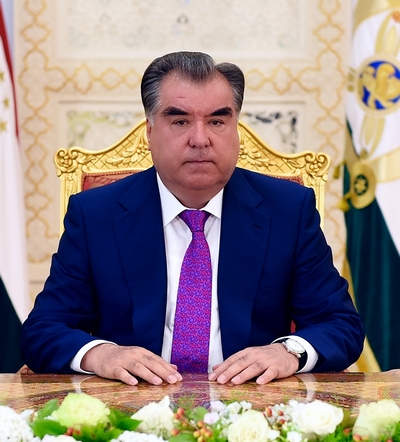
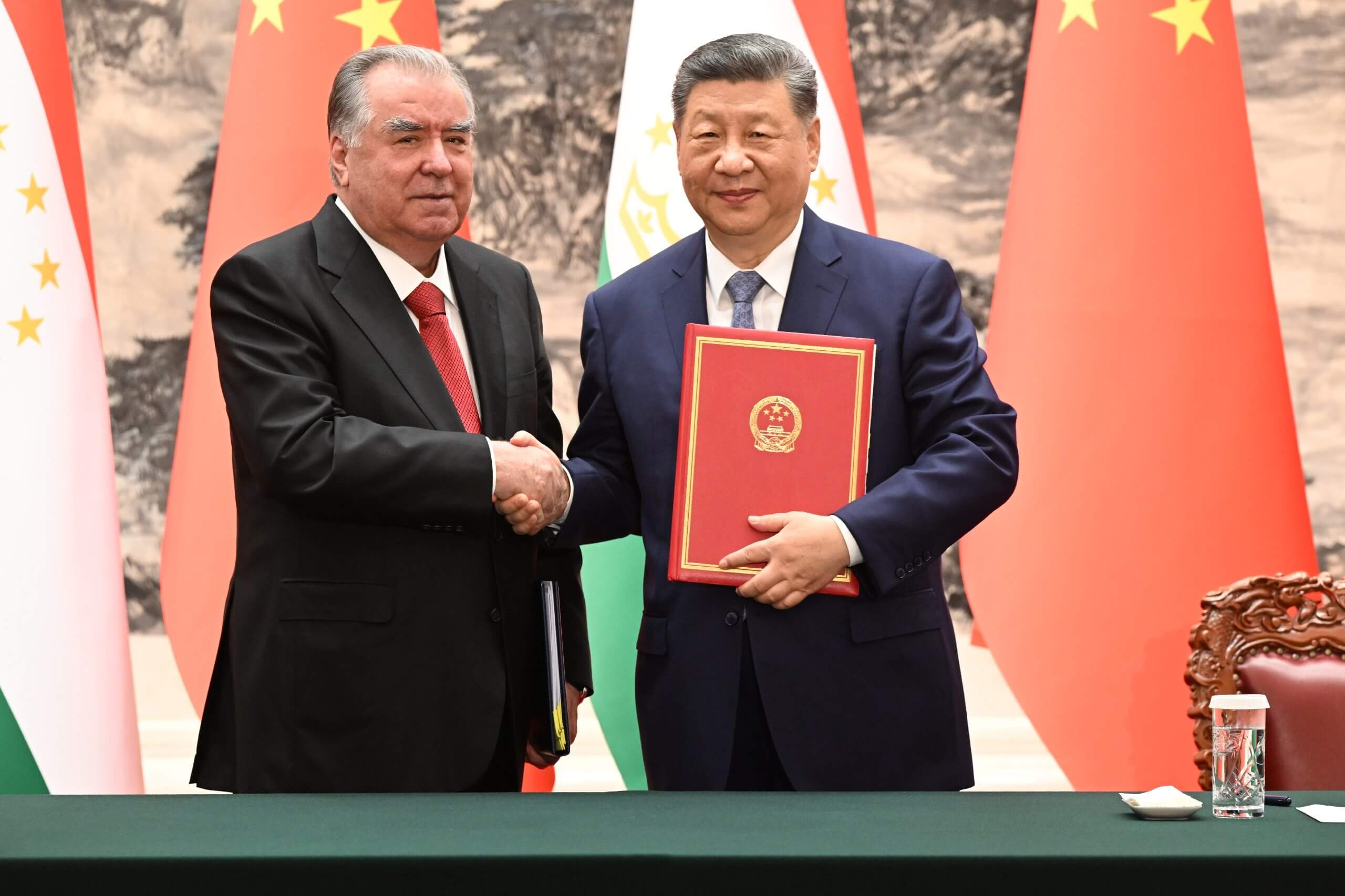
The State Visit of the President of the Republic of Tajikistan, Leader of the Nation, His Excellency Emomali Rahmon, to the People’s Republic of China on 11-14 May2026, carries significance that extends far beyond the ordinary diplomatic calendar. It became a logical continuation of the long-standing course pursued by Dushanbe and Beijing toward strengthening political trust, economic complementarity, and cultural and humanitarian affinity. In a period of accelerated transformation of the international system, when the states of Eurasia are seeking sustainable forms of development and security, Tajik-Chinese relations demonstrate a rare combination of pragmatism, strategic restraint, and respect for each other’s sovereign choice.
In this context, Tajik-Chinese cooperation should be considered through several interconnected dimensions: political trust, economic and investment complementarity, transport and logistics connectivity, industrial and energy cooperation, regional security, and humanitarian interaction. This approach makes it possible to perceive the current stage of bilateral dialogue not as an isolated diplomatic event, but as part of a long-term process of institutional, economic, and civilizational rapprochement between two friendly states.
It is important to emphasize that this visit should not be viewed merely as another episode in an intensive high-level dialogue. Its analytical value lies in the fact that it demonstrates the transition of bilateral interaction from a model of “sector-by-sector cooperation” to a model of comprehensive strategic alignment. Politics, trade, investment, industry, transport, energy, education, culture, and regional security issues are gradually forming a single system in which each element reinforces the others. It is precisely this systemic quality that makes the current stage of Tajik-Chinese partnership particularly promising s following:
- The first and perhaps most essential dimension of the visit is political. Tajikistan and China have built relations based on the principles of good neighborliness, non-interference in internal affairs, mutual support, and respect for national interests. For Tajikistan, such a political foundation has particular value because it allows the country to pursue a multi-vector foreign policy without losing strategic clarity. For China, cooperation with Tajikistan is important because Tajikistan is a reliable neighbor, a stable partner in Central Asia, and a state that plays a significant role in ensuring security along the southern flank of the region.
The symbolic meaning of the formula of friendship, good neighborliness, and cooperation lies in the fact that it consolidates the long-term horizon of relations. In international politics, symbols acquire practical significance when they are supported by institutions, projects, and the continuity of political dialogue. The fact that the current visit is already Emomali Rahmon’s twenty-third visit to China testifies not only to the personal attention of Tajikistan’s leadership to the Chinese direction, but also to the maturity of the entire diplomatic infrastructure between the two countries.
- The second dimension is security. Tajikistan occupies a special geopolitical position: it serves as a bridge between Central and South Asia, has a long border with Afghanistan, and is located at the intersection of the interests of major regional actors. Under these circumstances, strengthening cooperation with the People’s Republic of China in the field of security should be understood not as a situational measure, but as part of a long-term strategy for stabilizing the Central Asian space. Joint approaches to countering terrorism, extremism, transnational crime, drug trafficking, and cyber threats make it possible to shape a more resilient regional environment.
At the same time, the positive feature of Tajik-Chinese interaction is that security is not separated from development. Modern stability cannot be ensured by instruments of coercive deterrence alone; it requires jobs, infrastructure, education, energy, and industrial growth. Therefore, Chinese investment, trade routes, production projects, and educational exchanges have not only economic but also strategic meaning. They create the socioeconomic foundation of security, especially in border and mountainous regions.
- The third dimension is economy and investment. According to the data presented, from January to October 2025, the volume of bilateral trade exceeded USD 3.5 billion, increasing by almost 8 percent year on year. This dynamic is important not only in itself. It shows that trade and economic relations continue to retain growth potential even amid global economic instability, fluctuations in logistics chains, and intensifying competition for markets. For Tajikistan, China is one of its key trade partners, investors, and providers of technology.
However, the main challenge of the coming years is not simply to increase trade turnover, but to transform it qualitatively. Strategically, the most beneficial model for Tajikistan is one in which not only the import of equipment and goods grows, but also the export of value-added products expands, production localization increases, raw material processing is strengthened, and joint ventures and technological chains are created. In this sense, the 2026 visit may become a political impetus for moving from quantitative trade growth to the industrial deepening of cooperation.
The industrial dimension is of particular importance. Tajikistan possesses important resource, energy, and labor advantages, but it needs technological modernization, access to capital, production culture, and external markets. China, in turn, has experience in large-scale industrialization, modern production capacities, engineering competencies, and the practice of establishing special economic zones. The combination of these factors opens opportunities for the development of light industry, agricultural processing, the mining sector, construction materials, digital solutions, and machine-building components.
In predictive terms, the most promising model appears to be “production + logistics + export.” Its meaning is that Chinese investment in Tajikistan’s industry should be linked not only to the domestic market, but also to access to neighboring countries in Central and South Asia. In this case, Tajikistan can strengthen its role not as a peripheral consumer, but as a production and logistics hub. This requires industrial parks, transparent rules, workforce training, energy stability, and transport connectivity.
- The fourth dimension is transport and logistics corridors. In the twenty-first century, geography is no longer only a factor of distance; it is becoming a factor of opportunity. For landlocked countries without direct access to the sea, transport infrastructure is a matter of economic independence. In this context, cooperation between Tajikistan and China in the construction of roads, tunnels, bridges, border infrastructure, and logistics hubs is of strategic importance. It expands Tajikistan’s access to regional markets and enhances its transit attractiveness.
Of particular importance is the alignment of Tajikistan’s national development programs with Eurasian connectivity initiatives. With the right project logic, Tajikistan can become one of the key segments of routes connecting China, Central Asia, Afghanistan, Iran, Pakistan, and, beyond them, global markets. This does not mean that all infrastructure problems can be solved at once, but it sets a long-term vector: the higher the quality of roads, customs procedures, digital logistics, and route security, the greater the country’s economic agency.
- The fifth dimension is energy. Tajikistan has enormous hydropower potential, which is one of the state’s principal strategic resources. China’s experience in building energy infrastructure, grids, substations, industrial equipment, and renewable energy can play an important role in achieving Tajikistan’s national objectives. Projects that connect energy with industry are especially promising: stable and affordable electricity can become a foundation for metallurgy, processing, digital centers, agro-industry, and new forms of production.
At the same time, energy cooperation should be considered in the broader context of “green development.” Tajikistan already has an important competitive advantage due to the high share of hydropower in its energy balance. In the future, this can be used to attract environmentally oriented investment, develop low-carbon production, and promote products manufactured on the basis of clean energy. China, which is actively developing green technologies, solar energy, electric mobility, and digital grid management systems, is a natural partner for this direction.
- The sixth dimension is education, science, and culture. In the long term, it is the humanitarian component that determines the durability of interstate relations. Political agreements can be reached quickly and economic projects can be large in scale, but genuine trust is formed through people: students, scholars, teachers, entrepreneurs, translators, engineers, and cultural representatives. Tajik-Chinese cooperation in education and culture already has a solid foundation, yet its potential is far from exhausted.
For Tajikistan, it is especially important to expand the training of specialists who know the Chinese language, China’s economy, regional studies, international law, as well as engineering and digital competencies. In the context of growing interaction with the People’s Republic of China, the country needs not only translators but also a new type of analyst: specialists capable of understanding Chinese strategic culture, negotiation practices, industrial policy, and investment mechanisms. This direction may become one of the most valuable outcomes of the current stage of relations.
- The seventh dimension is the Shanghai Cooperation Organization and the regional architecture. Tajikistan and China are active participants in the SCO, and this platform makes it possible to translate bilateral trust into multilateral coordination. For Dushanbe, the SCO is important as a mechanism of security, economic interaction, and diplomatic balancing. For Beijing, it is one of the key institutions of Eurasian dialogue. The convergence of the two countries’ interests within the SCO strengthens their capacity to respond jointly to regional challenges.
Against the backdrop of uncertainty surrounding Afghanistan, the growing importance of Central Asia in world politics, and competition among international transport routes, Tajik-Chinese partnership is acquiring additional significance. It helps to form a culture of predictability in the region, where major projects are accompanied by political dialogue and security issues are considered together with development objectives. This is especially important for Tajikistan as a state interested in a stable, open, and economically connected Central Asia.
The strategic forecast following the visit can be formulated in three theses:
1. First, political trust between Dushanbe and Beijing will deepen, as it rests on the convergence of long-term interests rather than only on current circumstances.
2. Second, economic cooperation will gradually shift from a trade and investment model toward an industrial and logistics model, in which the quality of projects, localization, and workforce training will become more important.
3. Third, humanitarian and educational cooperation will become a key condition for the successful implementation of major economic initiatives.
At the same time, mature analysis requires seeing not only opportunities but also governance tasks. To maximize the effect of cooperation with the People’s Republic of China, Tajikistan needs to strengthen project expertise, improve the quality of feasibility studies, develop national personnel, ensure environmental standards, and seek a greater share of local participation in production chains. This is precisely the position that corresponds to the interests of a strong state: openness to investment must be combined with a national development strategy.
The current visit of the President of the Republic of Tajikistan to the People’s Republic of China can be described as a visit of strategic concretization. Its meaning lies not only in reaffirming friendship, but also in transforming friendly relations into new instruments of growth, security, and modernization. Tajikistan is entering a period in which foreign policy is increasingly linked to domestic development. In this logic, the Chinese direction is not an alternative to other vectors, but one of the most important resources for national strengthening.
Thus, Tajik-Chinese relations are at a stage where accumulated political capital must be transformed into long-term economic and intellectual capital. If, in the coming years, infrastructure connectivity, industrial development, energy potential, and workforce training are successfully combined, Tajikistan will be able to significantly enhance its role in Eurasia. The State Visit of 11-14 May 2026, creates a favorable political framework for this. Its significance lies in the fact that it strengthens not only today’s partnership, but also the image of a future in which Tajikistan acts as a confident, stable, and active participant in a new regional architecture.
Faridun M. Yusufjonov,
Candidate of Political Sciences –
Senior Research Fellow at the Institute
for the Study of Asian and European Countries,
National Academy of Sciences of Tajikistan
1. SOURCES AND REFERENCE MATERIALS
2. Official Website of the President of the Republic of Tajikistan. Materials on the state visit of the President of the Republic of Tajikistan to the People’s Republic of China, May 2026. [Electronic resource] URL:https://www.president.tj/event/news (Accessed: 12.05.2026).
3. Ministry of Foreign Affairs of the People’s Republic of China. Xi Jinping met with President of Tajikistan E. Rahmon. [Electronic resource] URL:https://www.fmprc.gov.cn/rus/zxxx/202509/t20250903_11700897.html (Accessed: 12.05.2026).
4. The President of Tajikistan arrived in China on a state visit. [Electronic resource] URL:http://russian.china.org.cn/china/txt/2026-05/12/content_118489377.html (Accessed: 12.05.2026).
5. Xinhua News Agency. Xi Jinping held talks with the President of Tajikistan. [Electronic resource] URL:https://russian.news.cn/20260513/d29bde9bee3f43e1b42730c44c99717f/c.html (Accessed: 12.05.2026).
6. Xinhua News Agency. Premier of the State Council of the People’s Republic of China met with the President of Tajikistan. [Electronic resource] URL:https://russian.news.cn/20260513/3c8efa35c4824f30b8e99ecc1e321077/c.html (Accessed: 12.05.2026).