On 25 June 2026, a significant historical event took place in the system of international relations with the adoption of the United Nations Resolution “International Decade for Strengthening Peace for Future Generations (2027-2036).”
The Necessity of Adopting the Resolution
This United Nations document was adopted at a time when the geopolitical, geostrategic, geoeconomic, and geocultural environment of the world is experiencing a severe and profound crisis. Humanity is currently witnessing increasingly intense competition among major powers and regional powers seeking influence in different parts of the world. In recent years, this crisis has created conditions conducive to the emergence of conflicts and wars in various regions, many of which continue to this day without having found a resolution.
The causes of such conflicts in different parts of the world are primarily associated with violations of international law and disregard for the principles of peaceful coexistence enshrined in the Charter of the United Nations. In this context, it should be emphasized that international law emerged as a mechanism for regulating the system of international relations. This unique achievement of humanity constitutes an instrument designed to prevent the outbreak of wars and conflicts throughout the world. In recent years, however, violations of international law have become increasingly evident, contributing to the narrowing of the space available for peaceful dialogue.
The contraction of the framework for peaceful dialogue, which is fundamentally central to the mission of the United Nations, compels the international community to seek a new concept of peacemaking. Today, new influential actors have emerged within the international community, including international organizations, international expert centers, global media outlets, and major digital corporations, all of which exert considerable influence on a wide range of global processes. In other words, while several decades ago independent nation-states were the principal actors involved in addressing global issues, today the range of participants in political, economic, and cultural processes has expanded considerably. This reality must be taken into account within the contemporary system of international relations.
The ongoing formation of a multipolar world order has contributed to the erosion of older models of cooperation and interaction among states. Consequently, not only must models of international cooperation be improved, but the contemporary world also requires a modern and coherent system of universal human values and norms. In previous years, double standards in assessing different situations, particularly negative phenomena such as religiously motivated terrorism and religious-political extremism, have also contributed to the emergence of a profound crisis affecting virtually all spheres of human life.
The world is currently in a state of disorder, or even anarchy. The rhetoric of war has gained precedence over the rhetoric of peace. In particular, the use of belligerent discourse and rhetoric by certain political figures of global standing has generated a sense of disillusionment among various segments of the international community. These circumstances have encouraged people around the world to search for a new paradigm for ensuring peace and for developing a new culture of peacemaking. In the highly contradictory conditions of the contemporary world, peace and stability have therefore become among humanity’s most pressing challenges. Regional conflicts, political crises, and security threats compel the international community to seek new approaches to peace diplomacy.
The Resolution as a Peacebuilding Message of the Leader of the Tajiks for the Well-Being of Humanity!
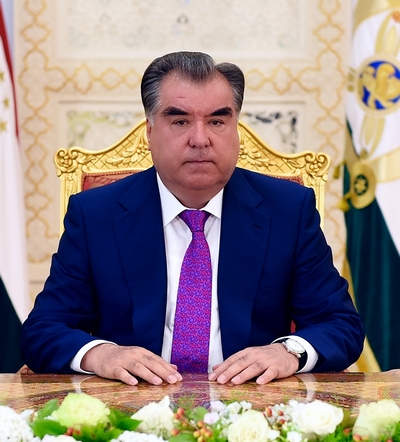
The new initiative of the President of Tajikistan, His Excellency Emomali Rahmon, aimed at strengthening peace for future generations of humanity, represents a logical continuation of the Leader of the Nation’s efforts in the field of peacemaking. This process began when His Excellency Emomali Rahmon addressed his nation with the words, “I will bring you peace.”
From the earliest days of his entry into political life, the ideas, views, and civilizational discourse of His Excellency Emomali Rahmon were closely associated with the cause of peacemaking. Throughout his tenure, the peace-oriented ideas and approaches of the President of Tajikistan, His Excellency Emomali Rahmon, evolved from a nationwide initiative aimed at ensuring peace and reconciliation within Tajik society, which subsequently found expression in the concept of National Unity into a transregional initiative. This development ultimately contributed to the emergence of the Khujand Declaration on “Eternal Friendship,” which undoubtedly constitutes an important pillar of peace consolidation in Central Asia.
Thus, the nationwide initiative of the President of the Republic of Tajikistan, His Excellency Emomali Rahmon, evolved into a transregional initiative in Central Asia and subsequently into the global initiative entitled “International Decade for Strengthening Peace for Future Generations (2027-2036).”
In our view, this new global initiative of Tajikistan is underpinned by the peace-oriented ideas and views of the Leader of the Nation, His Excellency Emomali Rahmon; his extensive experience in peacemaking; the profound knowledge of the Leader of Tajiks worldwide concerning the history and culture of peacemaking among the Tajik people; and his adherence to the peacemaking traditions of the Aryan ancestors of the Tajik nation, particularly Cyrus the Great.
Significance and Prospects for Implementing the Resolution to Ensure Long-Term Peace in the World
Undoubtedly, through the global initiative of the President of Tajikistan, His Excellency Emomali Rahmon that is, the Resolution “International Decade for Strengthening Peace for Future Generations (2027-2036)”, Tajikistan has proposed to the international community a new model of coexistence among all contemporary actors in international relations.
As stated in the Resolution, the primary objective of the Decade is to create conditions for ensuring that the interests of future generations are taken into account in decision-making processes. This includes expanding cooperation among children, young people, and older generations, as well as incorporating long-term approaches into public policy.
The Resolution welcomes the contributions of states, leaders, and civil society to strengthening peace through inclusive political processes, confidence-building measures, post-conflict reconstruction, and investment in social cohesion. The document notes that these experiences may serve as a source of inspiration for the implementation of new initiatives.
Under the Resolution, the Secretary-General of the United Nations, its specialized agencies, regional commissions, and other entities of the United Nations’ system are called upon to provide comprehensive support for the implementation of the Decade. The document also calls upon governments, civil society organizations, academic institutions, and the private sector to participate actively in this initiative, share best practices, and strengthen global peacemaking capacity.
The adoption of this Resolution comes at a time when millions of civilians in different regions of the world face security threats and armed conflicts. The Resolution states that Tajikistan’s initiative has acquired particular importance for the international community and underscores the role of our country as an active supporter of the global peace agenda.
Tajikistan’s experience of overcoming civil war and successfully achieving national reconciliation lends additional significance and credibility to this document. The Resolution specifically notes that “for the Tajiks, who value peace, political stability, and unity, it is precisely the lessons of the past that have become the foundation for advancing constructive dialogue in the international arena.”
Indeed, Tajikistan’s experience in the process of peacemaking and its contribution to resolving regional and international conflicts are regarded as a successful example of peacemaking for the international community. Today, Tajikistan is recognized internationally as a peace-oriented and peacebuilding state, while the contribution of the President of Tajikistan, His Excellency Emomali Rahmon, to the promotion of global peace has received international recognition.
The prudent policy of the leader of the Tajik state in strengthening peace and stability, developing regional cooperation, and advancing international initiatives has transformed Tajikistan into one of the most active states in the field of peace diplomacy. Tajikistan’s proposals at the international level, including those concerning water, climate, and security, have consistently been presented in a spirit of cooperation and commitment to peace.
Peace diplomacy is not merely a dimension of foreign policy but a vital necessity for contemporary society. Given its extensive experience in this field, Tajikistan can serve as a bridge of trust between states and regions.
Today, the Leader of the Nation, His Excellency Emomali Rahmon, is shaping international diplomacy through innovative ideas such as the establishment of a regional artificial intelligence center, the promotion of “green” energy, and the digitization of cultural heritage. The leadership of the Leader of the Nation is characterized by strategic vision, a capacity for dialogue, and commitment to sustainable development, making him a key figure in addressing the global challenges of the twenty-first century.
The President of the Republic of Tajikistan, His Excellency Emomali Rahmon, demonstrates exceptional initiative in international diplomacy and brings the countries of the civilized world together around the shared objectives of peace, sustainable development, and cultural unity. The initiatives of the leader of the Tajik state in the fields of water and climate diplomacy, the preservation of cultural heritage, and the strengthening of global peace and stability are supported by a robust legal framework and innovative ideas.
We are confident that the President of Tajikistan, His Excellency Emomali Rahmon, will continue to inspire the international community through his humanitarian ideas and contribute to shaping a future in which cooperation and sustainable development form the foundations of the world order.
Taking into account the contribution of the Leader of the Nation, His Excellency Emomali Rahmon, to ensuring peace and stability in the contemporary world, and within the framework of implementing the Resolution “International Decade for Strengthening Peace for Future Generations (2027-2036),” we propose the following:
- that the candidacy of His Excellency Emomali Rahmon be nominated for the Nobel Peace Prize. Through his concrete and effective actions aimed at ensuring peace and stability for humanity, particularly for future generations, the Leader of the Tajik nation is among the most deserving political figures of global standing to receive this award!
- that an Emomali Rahmon Institute for Peacebuilding Studies be established within the United Nations system. The time has come to study the best experiences and models of peacemaking in the countries of the international community, including Tajikistan, and to explore and develop new approaches and methodologies for ensuring peace throughout the world. The establishment of such an institution would make implementation of the Resolution’s objectives even more effective and efficient!
- that an Emomali Rahmon International Peace Prize be established. The time has come to establish a special award for foreign and national politicians and scholars, journalists and civil society activists, as well as peace-oriented women and young people who, following the example of the Leader of the Nation, His Excellency Emomali Rahmon, make efforts to promote peace throughout the world!
Dr. Rustam Haydarzoda,
Director,Institute for Asian and European Studies,
National Academy of Sciences of Tajikistan
Reprint from: https://globalnewspakistan.com/international-decade-for-strengthening-peace/