National peace and unity, political stability, and national security constitute fundamental conditions for the continuity of statehood, effective governance, sustainable development, and long-term socio-economic progress. For the Republic of Tajikistan, which experienced a devastating civil conflict during the first years of independence, these principles have acquired particular historical and political significance. The signing of the General Agreement on the Establishment of Peace and National Accord on 27 June 1997 marked a decisive stage in the country’s transition from armed confrontation toward national reconciliation, political stabilization, and post-conflict reconstruction.
Over the subsequent decades, the experience of peacebuilding and national reconciliation increasingly became an important element of Tajikistan’s political development and international positioning. At the same time, the country expanded its engagement in multilateral diplomacy and advanced a number of international initiatives addressing transnational challenges, particularly water resources, climate change, glacier preservation, sustainable development, regional security, and peaceful cooperation.
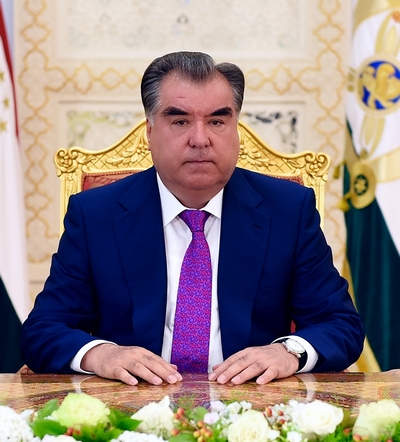
Within this broader diplomatic framework, the promotion of international peace and security has assumed growing importance. President of the Republic of Tajikistan Emomali Rahmon has repeatedly emphasized at the United Nations and other international forums the importance of political and diplomatic mechanisms for resolving disputes, adherence to international law, constructive dialogue among states, and strengthened multilateral cooperation. At the 79th session of the United Nations General Assembly, he stressed the need to reinforce the central role of the United Nations in conflict resolution and the restoration of peace and stability and reaffirmed Tajikistan’s support for resolving conflicts through political and diplomatic means.
This approach reflects a broader understanding of contemporary security. In an increasingly interconnected international system, sustainable peace cannot be considered exclusively in military or geopolitical terms. It is closely linked to political trust, social stability, sustainable development, environmental security, institutional resilience, respect for international law, and the capacity of states to cooperate in addressing transnational challenges.
From a National Peacebuilding Experience to an International Initiative
An important development in Tajikistan’s contemporary peace diplomacy was the proposal to proclaim an “International Decade of Strengthening of Peace for Future Generations, 2027–2036”.
President Emomali Rahmon first presented the proposal during the General Debate of the 79th session of the United Nations General Assembly on 24 September 2024. The initiative was advanced in a wider international context characterized by intensifying geopolitical tensions, armed conflicts, environmental pressures, socio-economic inequalities, and growing concerns regarding the long-term consequences of present-day political decisions for future generations.
The peace agenda was subsequently reiterated during Tajikistan’s participation in the 80th session of the General Assembly in September 2025. At that session, the President again emphasized political and diplomatic solutions to international disputes, respect for international law, international cooperation, and the need to build a peaceful and sustainable future.
The initiative acquired formal international status on 25 June 2026, when the United Nations General Assembly considered draft resolution A/80/L.54 under the agenda item “Culture of Peace.” The draft was introduced by Tajikistan together with supporting states and was adopted by a recorded vote of 153 Member States in favor, one against, and no abstentions. The adopted text became General Assembly Resolution A/RES/80/269, entitled “International Decade of Strengthening of Peace for Future Generations.”
The adoption of the Resolution represents a significant development in Tajikistan’s multilateral diplomacy because it translates a nationally initiated proposal into a framework for international engagement within the United Nations system.
Peacebuilding and the Interests of Future Generations
One of the most important conceptual dimensions of the initiative is its emphasis on the relationship between contemporary peacebuilding and responsibility toward future generations.
According to the presentation of the draft resolution at the General Assembly, the Decade is intended to promote peace, encourage dialogue and reconciliation, strengthen intergenerational engagement, and ensure that the perspectives and needs of future generations are reflected in relevant policies and decision-making processes. It also encourages participation by Member States, United Nations entities, regional organizations, civil society, academia, and other stakeholders.
This intergenerational dimension broadens the traditional understanding of peace. Peace is not approached solely as the absence of armed conflict but also as a long-term political and social condition that must be sustained through institutions, dialogue, social cohesion, education, cooperation, and responsible policymaking.
From this perspective, decisions adopted by governments and international organizations today may generate consequences extending far beyond the immediate political cycle. Armed conflicts, climate change, environmental degradation, technological transformation, socio-economic inequality, and weakening confidence in international institutions can all have long-term consequences for populations that are not yet represented in contemporary decision-making structures.
The incorporation of future generations into peace-related policy discourse therefore creates an important link between peacebuilding, sustainable development, preventive diplomacy, and long-term governance.
Tajikistan’s National Experience and Its International Peace Diplomacy
The initiative can also be examined in the context of Tajikistan’s own historical experience of conflict settlement and national reconciliation.
The country’s post-conflict development followed the General Agreement on the Establishment of Peace and National Accord signed on June 27, 1997 after several years of inter-Tajik negotiations. The peace process established a framework for national reconciliation and created conditions for the gradual consolidation of political institutions and post-conflict recovery.
As noted by analyst N. Mahmadullozoda, the proposal to declare the International Decade of Strengthening of Peace for Future Generations can therefore be considered in relation to Tajikistan’s historical experience of achieving national peace and overcoming the consequences of internal conflict.
Within such an analytical framework, the initiative may be interpreted as a progression from national peacebuilding toward international peace diplomacy. The domestic experience of reconciliation provides an important political and historical reference point, while multilateral diplomacy provides the mechanism through which peace-related principles can be promoted at the international level.
This connection is especially relevant because contemporary peacebuilding increasingly emphasizes national ownership, inclusive political processes, confidence-building measures, post-conflict recovery, social cohesion, and preventive approaches. During the presentation of the Resolution, the General Assembly was specifically reminded of the value of experiences involving dialogue, reconciliation, national unity, confidence-building, and long-term investment in social cohesion.
The Initiative in the Contemporary International Context
The adoption of the International Decade takes place against the background of considerable transformation in the international system. Geopolitical rivalry, prolonged armed conflicts, the erosion of trust among international actors, environmental pressures, technological change, and challenges to multilateral institutions have complicated collective responses to international security.
Under these conditions, diplomatic initiatives centered on dialogue and preventive approaches acquire particular relevance. Their significance lies not only in responding to existing conflicts but also in encouraging political conditions that may reduce the probability of future confrontation.
The Tajik initiative is therefore relevant to several interconnected dimensions of contemporary international relations: preventive diplomacy, a culture of peace, intergenerational responsibility, multilateral cooperation, sustainable development, and the peaceful settlement of disputes.
Its implementation will depend on the extent to which governments, international organizations, academic institutions, civil society, young people, and other relevant actors translate the principles of the Decade into practical activities. The Resolution itself envisages nationally driven and voluntary initiatives, including policy dialogue, educational programs, awareness-raising activities, and the exchange of good practices.
The academic community can play a particularly important role in this process. Research institutions are capable of examining comparative peacebuilding experiences, identifying the structural causes of conflict, studying mechanisms of national reconciliation, evaluating preventive diplomacy, and developing evidence-based recommendations for strengthening peaceful cooperation.
For Tajikistan’s research institutions, the Decade also creates an opportunity to examine the country’s national peace experience within a broader comparative and international framework. Such an approach would allow Tajikistan’s experience to be assessed not only as a national historical process but also in relation to contemporary theories and practices of conflict resolution, peacebuilding, preventive diplomacy, and international cooperation.
The proclamation of the “International Decade of Strengthening of Peace for Future Generations, 2027–2036” represents a significant stage in the development of Tajikistan’s multilateral diplomacy. Originating from a proposal made by President Emomali Rahmon at the 79th session of the United Nations General Assembly, the initiative subsequently developed into a United Nations General Assembly resolution supported by an overwhelming majority of voting Member States.
From an international-relations perspective, the significance of the initiative lies in its attempt to connect peacebuilding with intergenerational responsibility and long-term policymaking. It emphasizes that the preservation of peace requires not only responses to existing conflicts but also sustained investment in dialogue, reconciliation, social cohesion, international law, preventive diplomacy, and cooperation among states and societies.
For Tajikistan, the initiative also reflects an evolution from the country’s own experience of national reconciliation toward a broader international engagement with peacebuilding. The transformation of a national peace experience into a multilateral diplomatic initiative illustrates how the historical experience of individual states can contribute to wider international discussions on peace, security, and sustainable development.
The effectiveness of the International Decade will ultimately depend on its practical implementation between 2027 and 2036. Its long-term significance will be determined by the extent to which the principles contained in the Resolution are translated into concrete policies, research, educational initiatives, international partnerships, and mechanisms capable of strengthening a culture of peace for both present and future generations.
DOSTIEVA Dilafruz,
Junior Researcher Department of South and East Asian,
Institute for the Study of Asian and European Issues,
National Academy of Sciences of Tajikistan
Reprint from: https://globalnewspakistan.com/national-reconciliation-to-peacebuilding/